
From Concept to Finished Sewing Pattern Set: How Physical Sewing Pattern Production Works
Creating physical sewing patterns involves more than simply printing sheets of paper. Physical sewing pattern production for professional pattern designers must ensure accuracy, consistency, durability, and a professional presentation that reflects the brand.
This article explains, step by step, how physical sewing pattern production works in a professional printing environment, from the initial concept to finished, packaged products ready for sale or distribution.
Defining the sewing pattern set
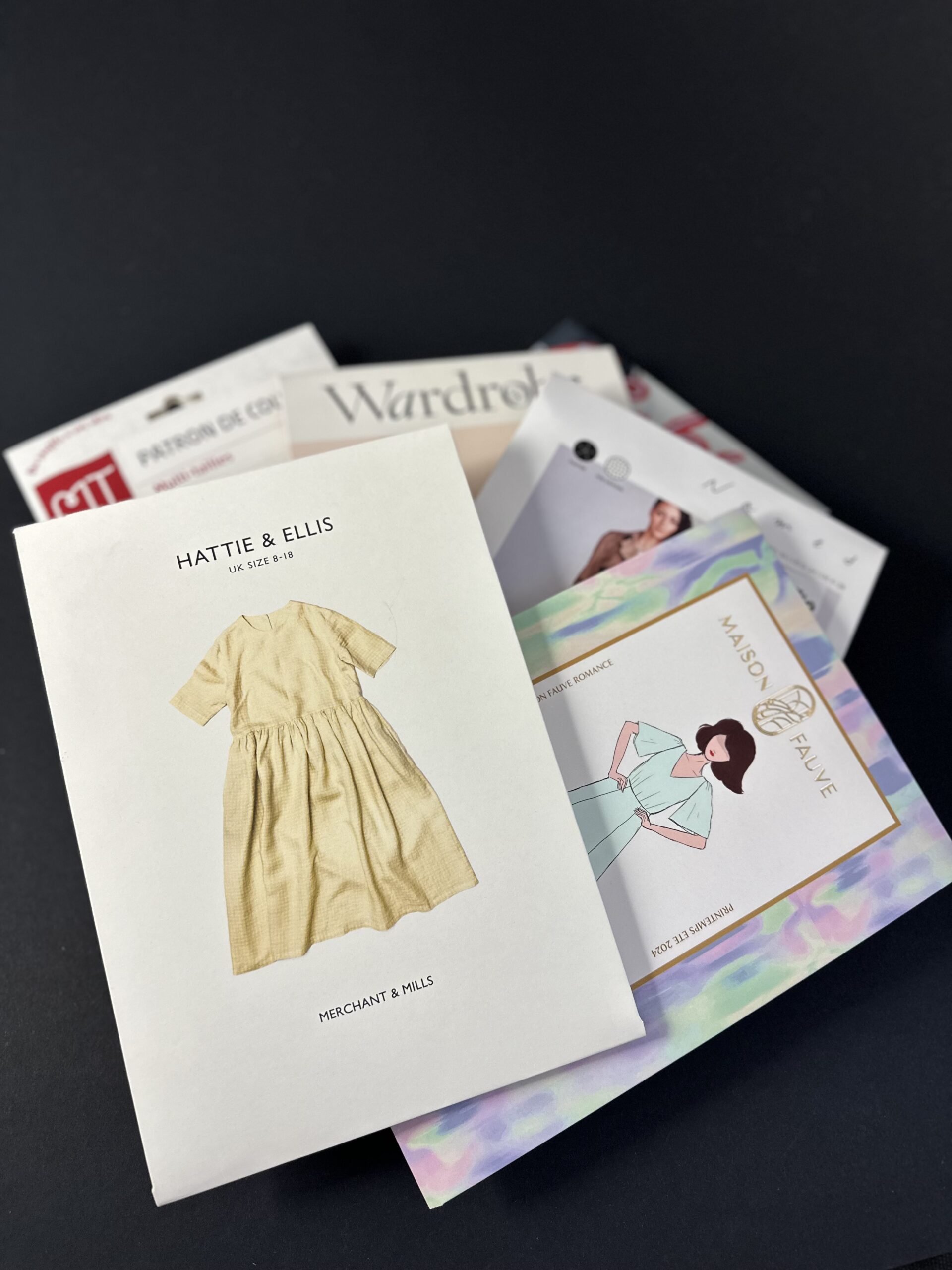
The first step in physical sewing pattern production is defining the scope of the sewing pattern product. A complete sewing pattern set typically includes:
-
pattern sheets (often large-format or tiled),
-
an instruction booklet,
-
a printed envelope or packaging,
-
optional inserts or branding elements.
At this stage, decisions are made about format, folding method, language versions, and whether the patterns will be sold direct-to-customer, wholesale, or both. These choices influence paper selection, printing method, and assembly, and are closely linked to sewing pattern printing services.
Preparing artwork and layout
Once the scope is defined, artwork preparation begins. This includes:
- layout of pattern sheets with clear markings and alignment,
- instruction booklet design with readable typography and diagrams,
- envelope design with branding, sizing information, and pattern details.
Consistent branding across all elements is essential, particularly for designers offering multiple patterns or planning repeat print runs. Many designers choose to align this stage with custom pattern envelopes and printed instruction booklets to ensure consistency across the full set.
File preparation and prepress checks
Before printing, files go through a prepress stage to ensure technical correctness. This typically includes:
- checking file formats (usually print-ready PDF),
- verifying bleed, margins, and trim areas,
- confirming image resolution and line clarity,
- checking colour settings and registration.
For sewing patterns, accuracy at this stage is critical. Even small technical errors can affect usability once patterns are printed and folded. In professional production workflows, this stage may also include preparing a prototype to verify formats, scaling, and overall usability before committing to physical sewing pattern production.
Choosing paper and materials
Paper choice plays a key role in the usability of physical sewing patterns. Common considerations include:
- paper weight suitable for repeated handling,
- opacity to prevent markings showing through,
- flexibility for folding without tearing,
- paper selection for instruction booklets that balances durability and readability.
For designers with sustainability goals, FSC-certified papers may be selected to ensure materials are sourced from responsibly managed forests, aligning with sustainable printing practices.
Printing method: digital or offset
For most sewing pattern businesses, digital printing is the preferred method, especially for small to medium print runs. Digital printing allows:
- short production runs without high setup costs,
- fast turnaround times,
- easy updates between reprints,
- consistent colour reproduction.
For larger, stable volumes, offset printing may be considered; however, digital printing remains the most flexible option for growing pattern brands engaged in physical sewing pattern production.
Folding, assembly, and packaging
After printing, pattern sheets are folded according to the chosen format and combined with instruction booklets and envelopes. This stage may include:
- precise folding of pattern sheets,
- inserting all components into envelopes,
- sealing envelopes with adhesive strips or branded stickers,
- quality checks to ensure each set is complete.
Treating the sewing pattern set as a complete system rather than separate printed items helps ensure efficient pattern sets assembly and reliable results across repeat orders.
Distribution, reprints, and scaling production
Once assembled, sewing pattern sets are prepared for shipping or storage. A professional production setup also considers:
- packaging suitable for postal delivery,
- consistency across reprints,
- the ability to scale production as demand grows,
- maintaining identical specifications between print runs.
This is particularly important for designers selling internationally or supplying retailers.
Summary
Producing physical sewing patterns is a structured process that requires careful planning at every stage, from file preparation and printing through to folding, assembly, and packaging. Working with a specialist sewing pattern printer helps ensure accuracy, consistency, and a professional finish across all elements of the pattern set.
Understanding physical sewing pattern production allows designers to make informed decisions, avoid common pitfalls, and build a reliable production workflow that supports long-term, scalable growth.

